
Business role
Systems support commercial activity, operational workflows, client requests, and reporting needs.
Case study
Software Couch is the primary technical partner for revenue-critical production systems used by Matrix Marketing and their clients.
Engagement
Multi-year production ownership
Work
Development, support, infrastructure
Users
Commercial and operational teams
Governance
SLA-backed support
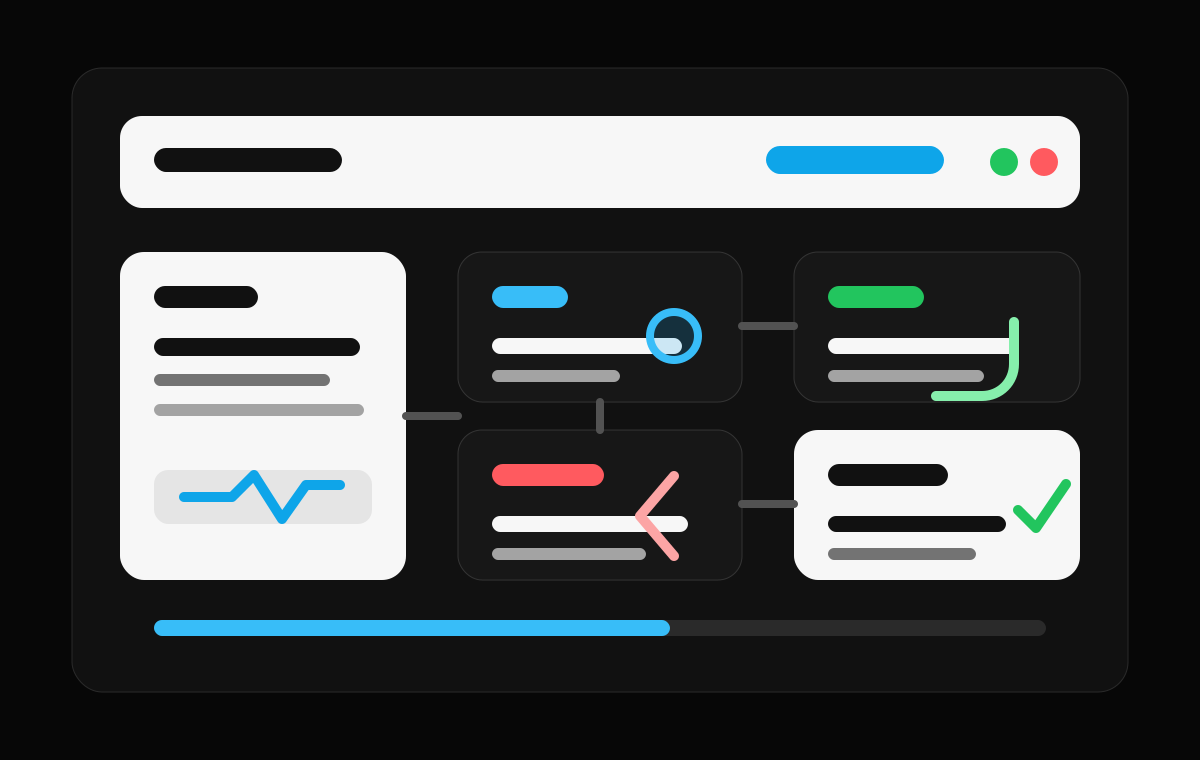
This is the kind of work many companies need: not a flashy launch, but a dependable technical partner for systems that keep the business moving.
Executive summary
Systems support commercial activity, operational workflows, client requests, and reporting needs.
Software Couch owns development, releases, support, infrastructure, monitoring, and long-term maintainability.
The engagement prioritises controlled change, reliability, stakeholder clarity, and practical technical debt management.
Tools and technologies
The operating model combines product visibility, web application delivery, backend and data ownership, and support tooling so Matrix Marketing has one accountable technical path.
Matrix Marketing operates client-facing and internal systems that support lead generation, account onboarding, reporting, and daily operational workflows.
The systems support daily commercial activity.
Client requests and operational needs must be handled without destabilising the platform.
Technical work has to be explained in business terms.
The engagement covers the full software lifecycle, from new development through hosting, monitoring, releases, bug fixes, and long-term maintainability.
Operating rhythm
The engagement is run as a production partnership. Work is visible, changes are traceable, and support remains connected to the same engineering context as new development.
01
Asana is used to keep requests, priorities, support items, and follow-up work visible.
02
Changes are managed through GitHub so implementation history and release work remain traceable.
03
Frontend and backend changes are handled across the web application and supporting services.
04
Relational data, reporting flows, and operational data quality are treated as part of production ownership.
05
Deployments are planned around risk, test coverage, communication, and rollback awareness.
06
Monitoring, maintenance, backups, and SLA-backed support keep the platform accountable after release.
The goal is controlled change. New features matter, but so do reliability, reversibility, operational visibility, and avoiding unmanaged technical debt.
Founder-led architecture and risk calls when the system needs careful judgement.
Ongoing maintenance, alerting, incident response, and production visibility.
QA, deployment planning, rollback thinking, and communication around change.
Client-specific requests are assessed for long-term reuse and operational fit.
The relationship continues because the systems are treated as living business assets rather than once-off project deliverables.
What buyers should notice
Support is part of the engagement, not an emergency add-on.
Technical decisions are made with business continuity in mind.
Change is managed through visibility, communication, and release discipline.
If your business depends on software that needs development, support, or stronger technical ownership, this is the kind of engagement Software Couch is built for.